Sponsored by

Tired of news that feels like noise?
Every day, 4.5 million readers turn to 1440 for their factual news fix. We sift through 100+ sources to bring you a complete summary of politics, global events, business, and culture — all in a brief 5-minute email. No spin. No slant. Just clarity.
I Almost Threw Out My Keurig. It Wasn't Broken.

Every cup from my Keurig started tasting weak, flat, stale — so I unplugged it and stuck it in a closet. Then I learned the dirty secret of grocery store K-Cups: by the time a pod reaches your kitchen, it's usually spent months going from factory to warehouse to truck to shelf. The flavor oils are long gone. Some brands even over-roast to hide it.
The fix wasn't a new machine. It was fresh pods from Angelino's, a family-owned L.A. roastery that roasts, packs, and ships within 3–5 days — straight to your door, from 39¢ a cup. Over 1,000,000 happy customers. 50+ flavors, no subscription required, and 15% off your first order, applied automatically at checkout.

“The average cost of a molotov has increased 30 percent”
Hey Everybody,
My microphone smelled like tear gas this morning.
I was recording a short video about the violent protests ongoing here in Tirana Albania and realized that my mic had been saturated in the stuff. It's weird how normal the sound of explosions or the haze from dumpster fires are now.
It's weird that everyone in this city thinks about what will happen next everyday while it barely gets a mention in the international news. This is always a difficult thing to come to grips with.
Everything it happening all at once.
The reason we study these things is to understand why the world fractures the way it does, and hopefully make that much less likely in the future. My microphone smelled like teargas this morning, but that won't always be the case. (At least I hope not.)
Let's zoom out to understand the rest of the world.
Eric
P.S.
We're beginning Season 2 of The Under Report Podcast and I'm very excited to share new stories and interviews with you all. If you haven't listened yet check out this episode about space called "Dark Orbits.”
Bottom Line Up Front (BLUF)
Brazil’s electoral court fines Meta as US prosecutors move on ballots in California and Alaska. Both governments have moved the fight over the vote into the courtroom.
Britain, France, Egypt and Turkey step in to defend Saudi Arabia as US diplomats leave Riyadh None of them will strike inside Yemen.
Israel shuts down the West Bank. Opening a new front ahead of elections might cement Bibi's position or put him on the back foot.
Libya’s eastern parliament ratifies Turkey’s maritime map and the EU declares it void. Haftar’s camp moves from Cairo’s orbit toward Ankara’s.
France’s protests shrink as its borrowing cost rise. Macron is in a tight spot ahead of elections with few good options.
Democracy Goes on Trial
What happened
On Oct 18 Brazil’s Superior Electoral Court (TSE) gave Meta 24 hours to prove it treats Lula and Flávio Bolsonaro the same and doubled the daily fine to R$1 million. On Oct 22 Corregedor Ricardo Villas Bôas Cueva opened abuse-of-power cases against both campaigns. Meta’s Oversight Board paired the Lula ad accounts with the US “No Kings” removals as “recurring enforcement failures.”
The Department of Justice (DOJ) sued California over about 20,000 mail ballots it calls likely noncitizen, then on Oct 23 went to the Ninth Circuit before Judge David Carter ruled. A day earlier it sued Alaska to block certification if Mary Peltola wins.
Why it matters
Global elections are being moved to new battlegrounds. Countries are suing social media giants while the executive branch of the US is attempting coercion through the courts. Every party in power attempts to place their thumb on the scale, but now, its understood as a part of the process. The most basic function of democracy is telling us who the leader is. If it takes months of legal battles, locking horns with multi-national companies, and still leaves the population divided over the outcome, the system is failing.
What we’re watching for
Whether the TSE advances the case against Flávio or lets it lapse. (Also, what Meta's response is).
Whether DOJ pursues additional cases against democratic candidates.
If (and when) results are contested on grounds of tampering.
Forecast: 80 percent chance the DOJ attempts additional legislation against democratic candidates before certification.
Riyadh Seeks Shelter
What happened
On Oct 20 Britain announced Typhoons would fly defensive patrols over Saudi cities, with no strikes inside Yemen. On Oct 21 the State Department ordered non-emergency staff out of Saudi Arabia after drone debris killed two Aramco contractors. Sisi said Egypt’s role “does not include an attack on Yemen”; Turkey sent the Mecca pact to its parliament; Macron landed in Riyadh with French troops at Yanbu. On Oct 24 the coalition intercepted missiles aimed at Riyadh, Yanbu and Taif.
Why it matters
Saudi Arabia is discovering the extent of its strategic relationships, and it's not looking great. Turkey, the UK, France, Egypt, and Pakistan are providing defense and overwatch, but this doesn't solve Riyadh's Houthi problem. So long as they can directly endanger Saudi oil infrastructure, they're an existential threat to the Kingdom which has failed to diversify away from selling crude as their main source of revenue. Long story short, someone is going to have to go fight in Yemen, not just defend Saudi borders. This might be the US post elections.
What we’re watching for
Any US positioning of assets within striking distance of Western Yemen.
Whether Egypt’s deployment carries troop numbers and a date.
If Riyadh answers Tehran’s mediation offer.
Forecast: 65 percent chance that US forces conduct an acknowledged strike on a Houthi target inside Yemen by Nov 30.
Want to support independent analysis and journalism? Join the Under Report for full access. Here's what full subscriptions are reading this week:
“Israel's Next Front”
"Benghazi Redraws the Sea"
"Macron's Tough Spot"
Eric's Field Note
Make sure you’re subscribed to The Under Report podcast to never miss an episode! Season 2 is coming soon and you don’t want to miss it so make sure you’re all caught up on what we were up to in Season 1!

Israel's Next Front
What happened
On Oct 23 gunmen killed two soldiers at a checkpoint outside Hebron. Netanyahu ordered the city sealed and preparations for “a full lockdown of all of Judea and Samaria,” then said on video that Israel would “destroy this place” with an operation “the likes of which have not been done since the Six-Day War,” adding “we will determine the timing.” That night the IDF and Shin Bet called the operation “focused and limited,” lasting “several days.” On Oct 24 troops emptied two Hebron neighborhoods and razed buildings; Katz said about 2,000 people were displaced and would not return until “all the Hamas issues in Hebron” are finished. On Oct 25 the IDF announced a ban on Palestinian workers through Monday and the closure of all West Bank crossings on election day, and said it had searched 400 sites and arrested 40.
Why it matters
Netanyahu is fighting to maintain power in Israel. The two biggest issues are security and cost of living. Closing down the West Bank underlines his security bona fides but might backfire as it could demand yet another escalation from an Israeli military already fighting in Gaza and Lebanon, while holding ground in Syria. A move like this also demands that other parties take a stance on the operation. If this makes the population feel safer, it might push the elections towards his party. If it stretches a war weary population too thin, it might force him out of power.
What we’re watching for
Whether the IDF names an operation, calls up reservists, or extends the closure.
Election messaging about the closure, what is each party's position?
Indications of popular support for expansion of pushback against opening another front.
Forecast: 80 percent chance that Netanyahu maintains power as either Prime Minister or in a caretaker government role March 31, 2027.
Benghazi Redraws the Sea
What happened
On Oct 20 Libya’s eastern House of Representatives ratified the 2019 Turkey-Libya maritime memorandum of understanding (MoU). This is a significant move because it had refused for seven years, and restored ties with Ankara. The same day the presidents of the European Council and Commission called the MoU “null and void”, and the High Representative restated it on Oct 21 for all 27. Greece called it illegal; Egypt rejected it; Turkey welcomed it. The vote followed the replacement of speaker Aguila Saleh, Cairo’s ally.
Why it matters
We're seeing new alignment in the Mediterranean. Turkey and Libya being refused by Europe. Israel and Greece being chastised by Turkey. If these relationships are durable then conflict between the networks is likely. However, Libya remains in an uneasy state of conflict and Europe claims jurisdiction over the waters which were just claimed. The real question is: does Turkey have the will to fight for this relationship over the long term.
What we’re watching for
Whether Greece or Cyprus asks the Council for a measure naming the MoU.
Any Israeli comment on the MoU.
If Turkey issues a NAVTEX or Greece licenses surveys in blocks the map covers.
Forecast: 30 percent chance that the EU adopts Council conclusions or a sanctions-style measure naming the Libya-Turkey MoU by December 31.
Macron's Tough Spot
What happened
On Oct 17 the Interior Ministry counted 550,000 marchers and 1,800 arrests; Limoges city hall burned. On Oct 23 the Assembly rejected the revenue half of the 2027 social security budget, and Moody’s held France at Aa3 negative, tied to that budget passing. The 10-year yield hit 5.14 percent, above Italy’s. On Oct 24 turnout fell to 35,000 by midday against 60,000 a week earlier. Macron’s Gulf tour secured 200,000 tonnes a month of Emirati and Bahraini diesel and 2 TWh a month of Qatari LNG.
Why it matters
When markets become strained the French population is the first to feel it. But Macron is caught between many rocks and many hard places. He needs to lead the way in building security infrastructure for Europe as a nuclear armed power and one of he continents biggest economies. He needs to ensure energy security, which sent him to the Gulf for diesel while French soldiers defended Saudi Oil. Meanwhile, French pensions eat up a huge chunk of municipal funds while the school system fails students and the west blames immigrants. This is a no win situation.
What we’re watching for
Whether the Assembly passes the revenue section on Oct 27, and by how much.
If a deal is made with the protesters, and if so, where the money comes from
Whether the Nov 5 strike touches refineries, ports or rail. One would be bad, all are possible.
Forecast: 65 percent chance a strike adds pressure into the system in the next 30 days.
Eric’s Field Note
Last night an American photographer was arrested in the Albanian protests. He was taking photos of police beating a protester about 200 yards from my front door. If I had made it home twenty minutes sooner it's likely I would be arrested too. This is a sobering fact of life in a city at war with itself.
Law and order is a thin veneer which Americans are not used to seeing crack. This is one of the reasons that we don't realize that its happening right in front of us. The reality is that norms have to be maintained by everyone or else those in power get the final say. This is easy to believe and hard to enact.
I'm quite careful about how close I get to frontlines, but when the frontline is everywhere its difficult to know where to stand. Last night it was on my street. So, do I continue my coverage as normal or soften the focus and leave some things unsaid? Right now, I don't know the answer.
All I know is someone who has the same passport as me ended up in Albanian jail last night for doing some of the same things I do. We assume that we are protected everywhere, more often than not, that is just an assumption. I'll continue my work here. I will stay safe while I do it.
Thank you for your support.
(By the way, he was released from jail after several hours and is now out of the country.)
About Eric
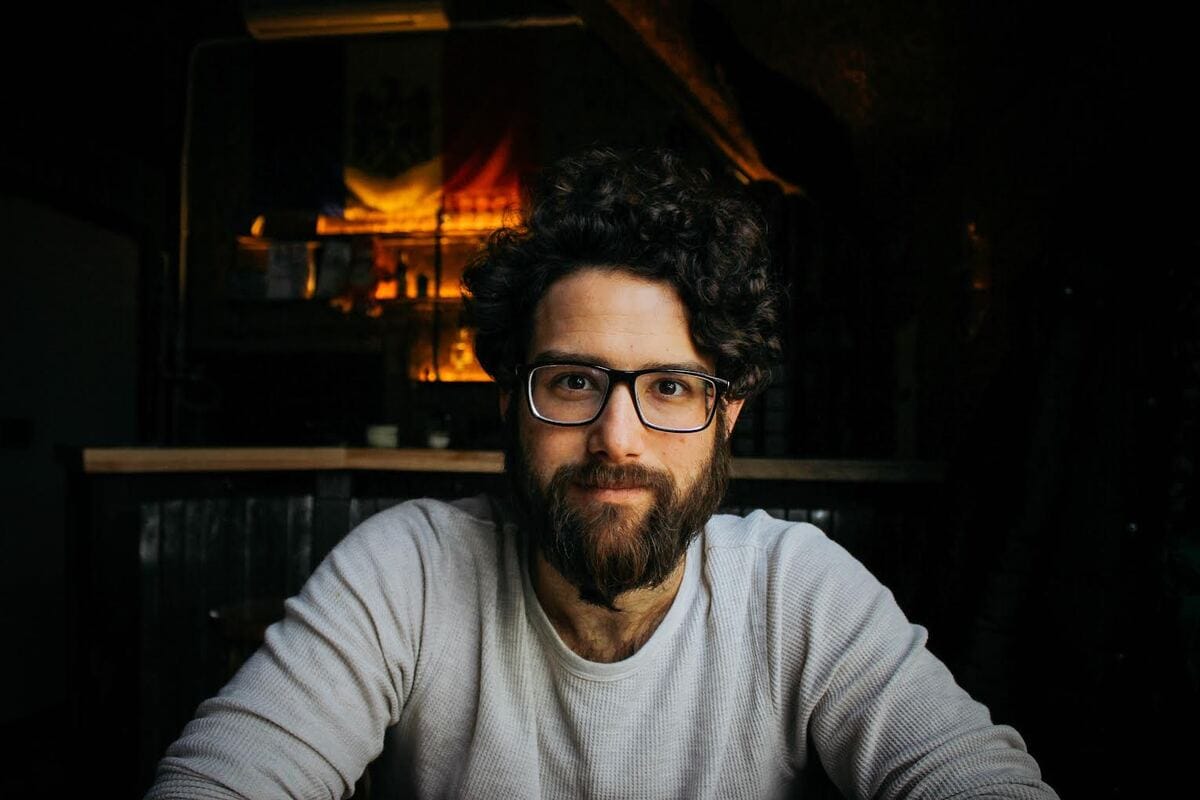
Eric Czuleger is a journalist and travel writer who has lived and worked in over 47 countries. He holds a masters degree from the University of Oxford and he is completing a National Security degree from the RAND school of public policy. He's the author of You Are Not Here: Travels Through Countries That Don’t Exist, and host of the “The_Under_Report” TikTok channel.
Tired of news that feels like noise?
Every day, 4.5 million readers turn to 1440 for their factual news fix. We sift through 100+ sources to bring you a complete summary of politics, global events, business, and culture — all in a brief 5-minute email. No spin. No slant. Just clarity.